Editor’s note: This is the fourth and final article in a series about private and public-sector efforts to scale reusable packaging systems in the Portland, Oregon, area.
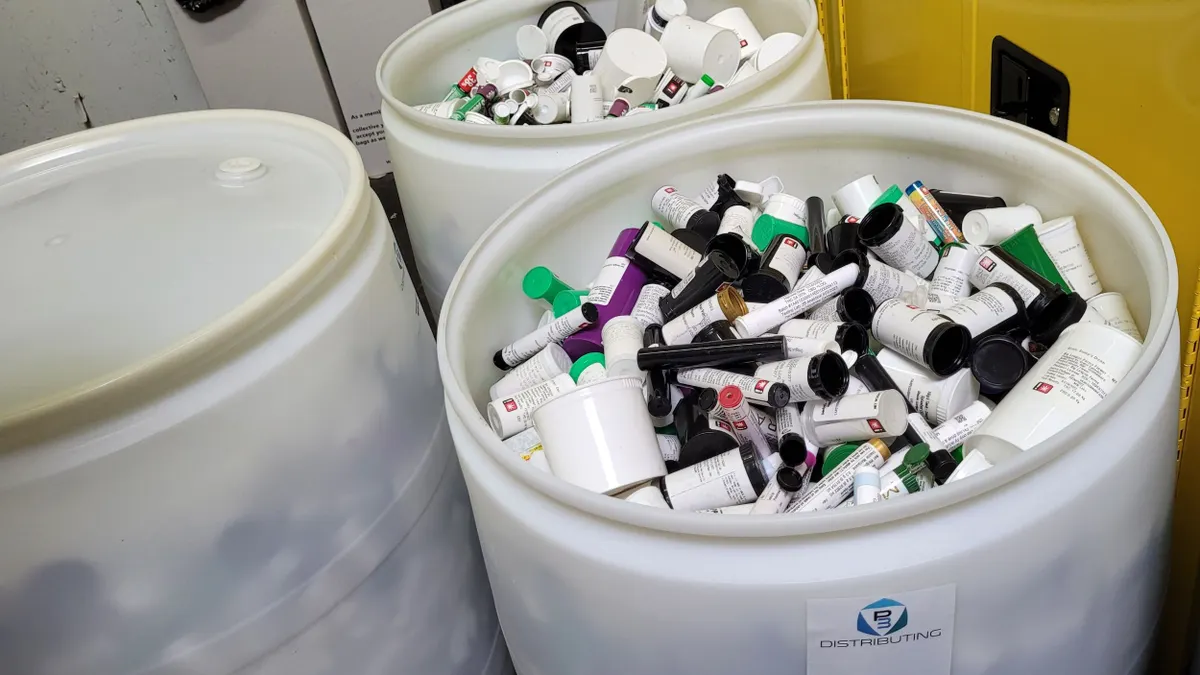
MILWAUKIE, Ore. — The next garden plant you buy might be in a plastic pot with a connection to a different kind of pot: recycled cannabis packaging. P3 Distributing is an example of a company that is diversifying its service offerings, including by adopting a reuse system. Now, it aims to achieve scale.
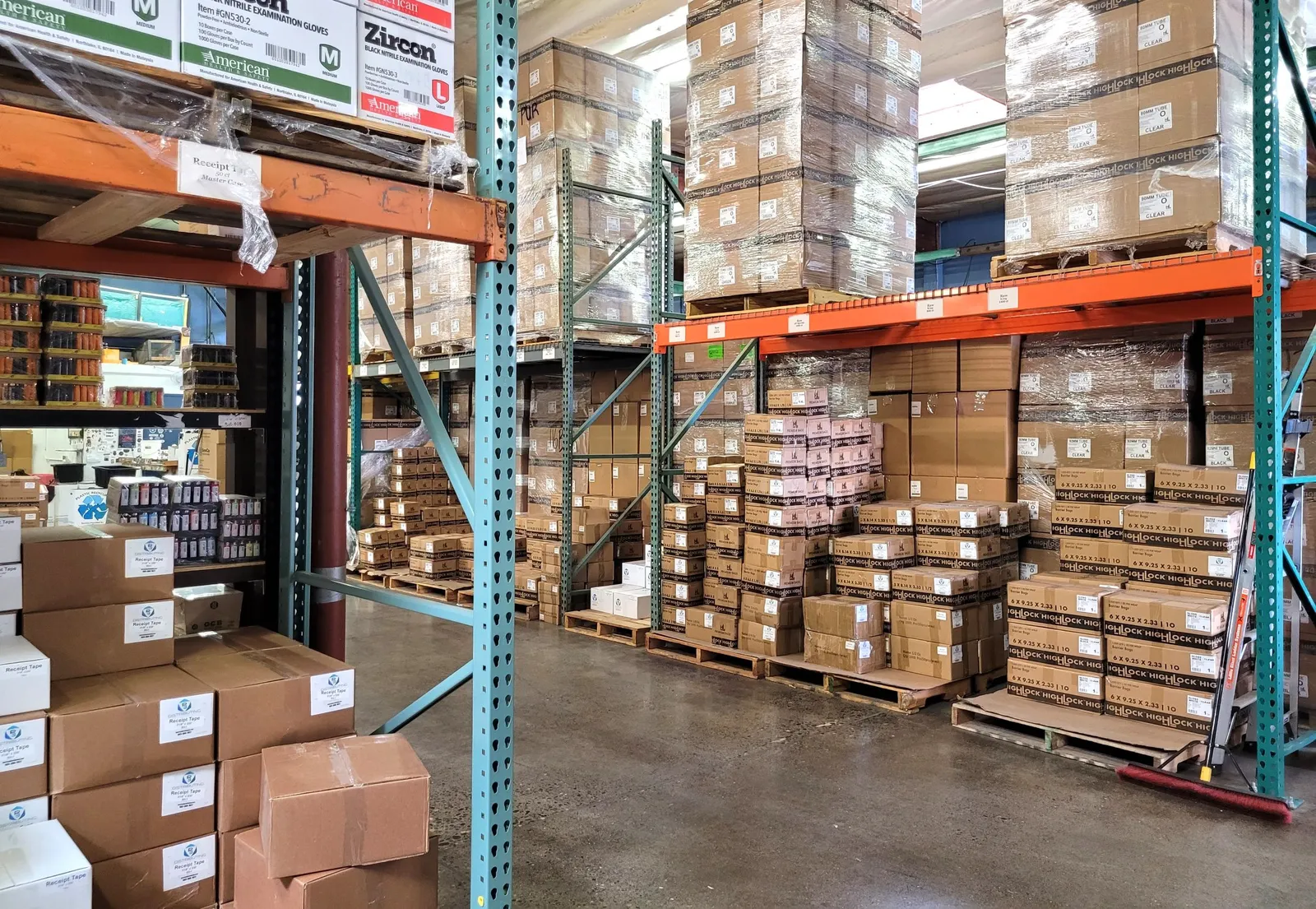
Owner Patrick Caldwell founded the cannabis packaging supply company with his father in the Portland suburb of Milwaukie in 2016, and he soon wanted to find a more sustainable end-of-life solution for the packaging items he sold. The issue really hit home for him a year later when China announced its National Sword policy to clamp down on plastic scrap imports, and Caldwell's local plastic processor no longer would accept those materials. That led him to explore adding recycling operations at P3, which happened in 2017.
Conventional recyclers typically find cannabis packaging too small or too contaminated with cannabis oils to deal with, Caldwell said. But P3 specifically targets polypropylene packaging, which he said is "highly recyclable and highly valuable." It accepts other substrates as well, including metal and fiber, but it takes those to a local processor.
Anderson Pots is the end user that "basically buys everything we can make" to manufacture plastic nursery pots, Caldwell said. Those pots are shipped nationally, which is the only non-local link in the supply chain, he noted.
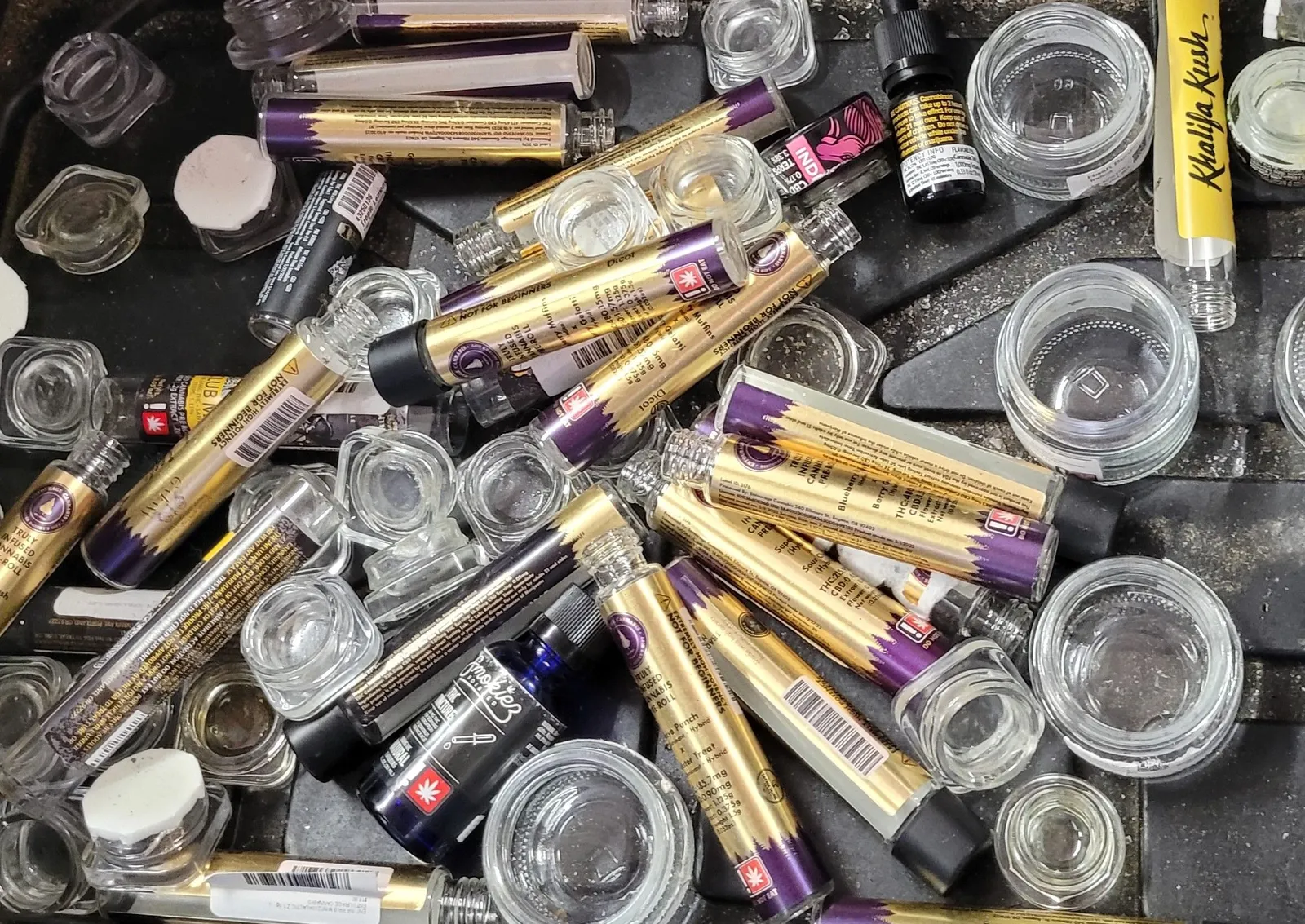
For the past year, P3 has again been working on a new business iteration: washing collected glass cannabis packaging for reuse. Not all items are currently profitable, but the company still handles them to provide an environmental benefit. For instance, thin tubes don’t have a profitability prospect yet, but small jars do.
"We reuse about 2% of the glass we sell. If I could increase that to 20%, I could sustain my entire recycling program with the profit. So this has real potential," Caldwell said.
Recycling process
P3 Distributing has agreements with local dispensaries to pick up the used cannabis packaging that customers have dropped off in onsite bins.
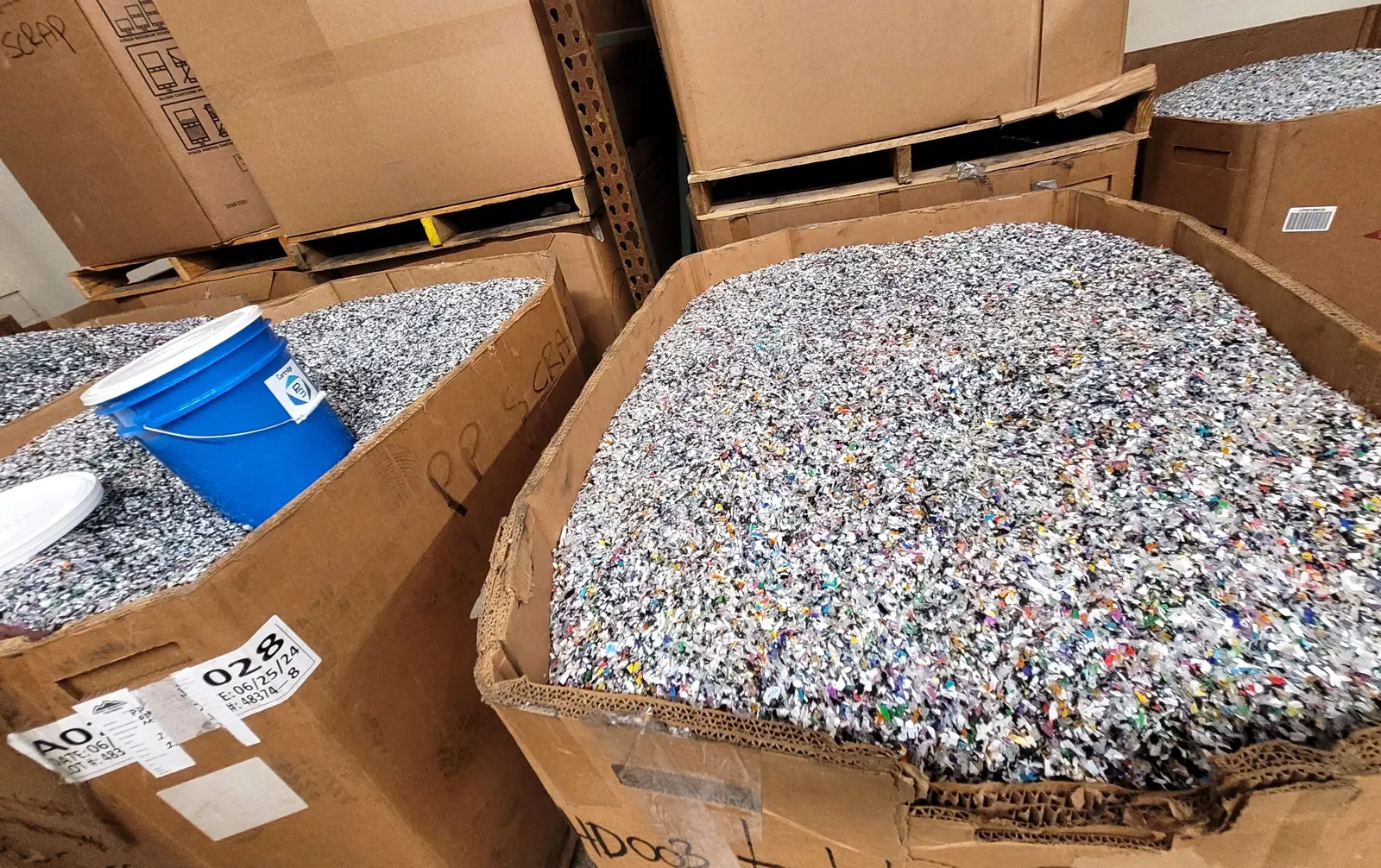
About six years ago, the business purchased a granulator for the facility. Caldwell estimates P3 processes 2,000 to 3,000 pounds of PP per month.
While PP is valuable, it's also easily contaminated, he said. Labels are the leading contaminant. Some packaging formats are nearly entirely covered with a label that needs to be removed before processing. While PP labels aren't yet mainstream, he said, it would make a world of difference for reducing contamination rates if both products and labels were the same material. P3's own product supply includes polypropylene labels.
"Some of these labels are polypropylene so we don't have to remove them. ... We can just toss it into the granulator and it gets recycled just like the bottle," Caldwell said.
For now, P3 employees soak most of the cannabis packaging in isopropyl alcohol to dissolve the adhesive and then peel off the labels. The company also has invested in an alcohol distiller to recycle the used alcohol; the machine gets back 96% of the alcohol for reuse, Caldwell said.
Now, the goal is to figure out how to get more packaging back for processing. Regardless of how many hundreds of thousands of pounds of packaging P3 sells each month, it tends to get back just 2,000 to 3,000 pounds for recycling. Finding ways to boost collection would help with scale and profitability.
"Recycling costs money, that's the way it is," Caldwell said. "I believe in this system. I believe it's replicable."
Pursuing partnerships
Caldwell anticipates that P3 Distributing will eventually sort its clear from its colored granulated PP because the clear has higher value. "But that's down the line. Our current focus is really on reuse."
P3's system doesn't yet have the necessary scale, Caldwell said, noting that manually washing and drying each reusable item is inefficient. He's exploring affordable washing and drying technologies to increase efficiency and profitability.
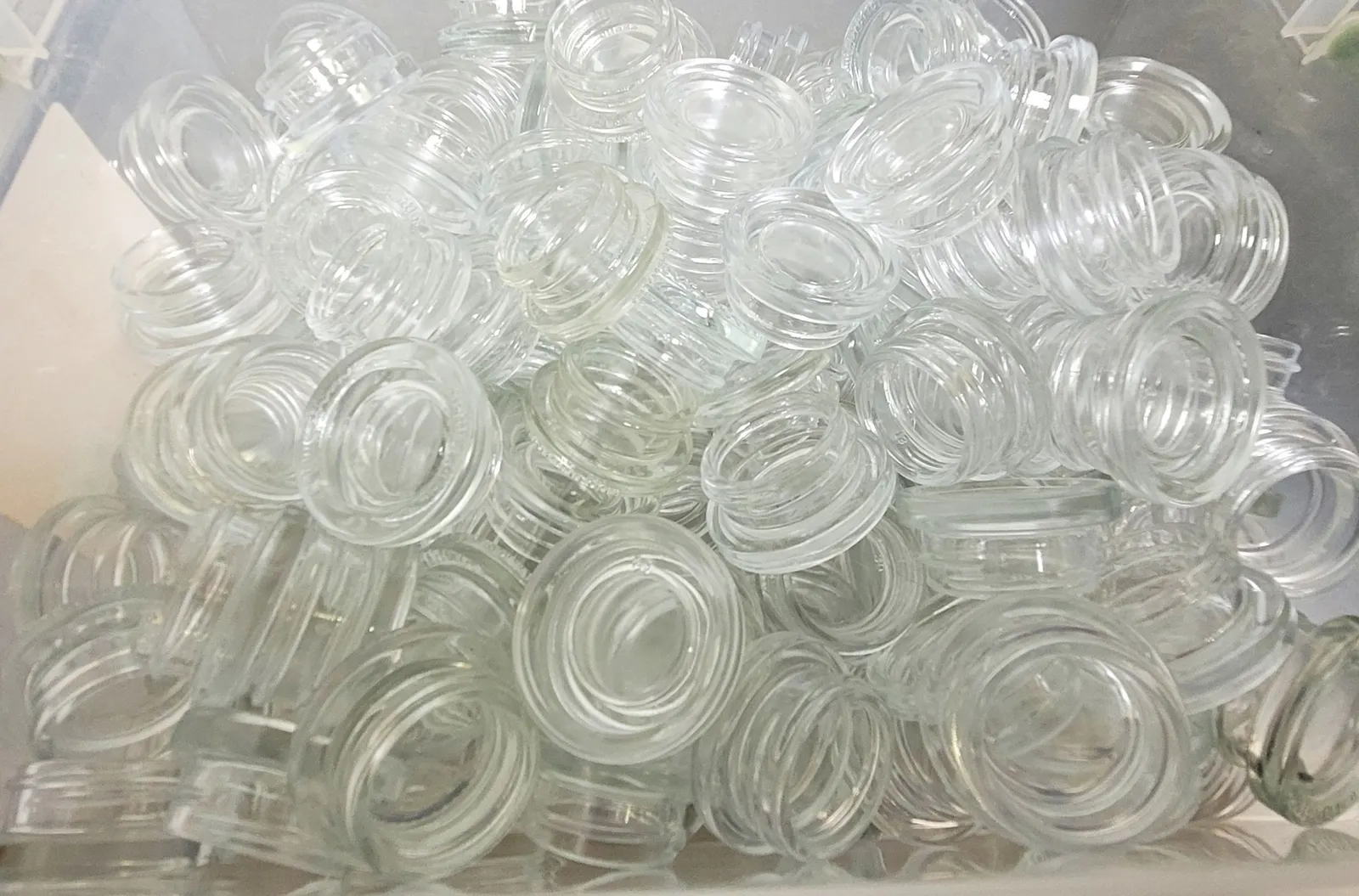
He's also looking for more partnerships that make financial sense for both parties. For example, he's in discussions with a businessperson in New York who would purchase P3 Distributing's glass cannabis jars and then incorporate them into a reuse program there.
The business also seeks local partners interested in adding their reusable packaging products to the wash line to achieve a greater return on investment for washing and drying equipment. Those partners can be non-cannabis-related businesses, he explained, such as for reusable cups or beverage bottles. That would be similar to some existing recycling partner relationships, including with Tillamook Creamery, which sends some small, PP testing bottles to P3 Distributing for recycling.
Caldwell anticipates that the next 10 years will bring an industry shift to greater reuse as the value becomes more evident and operators further hone their business plans.
"Reuse isn't taking off yet because it needs scale," he said. "There's so much opportunity for reuse. It just takes a little bit of effort to get started. But if you do it right, there's money in it.”