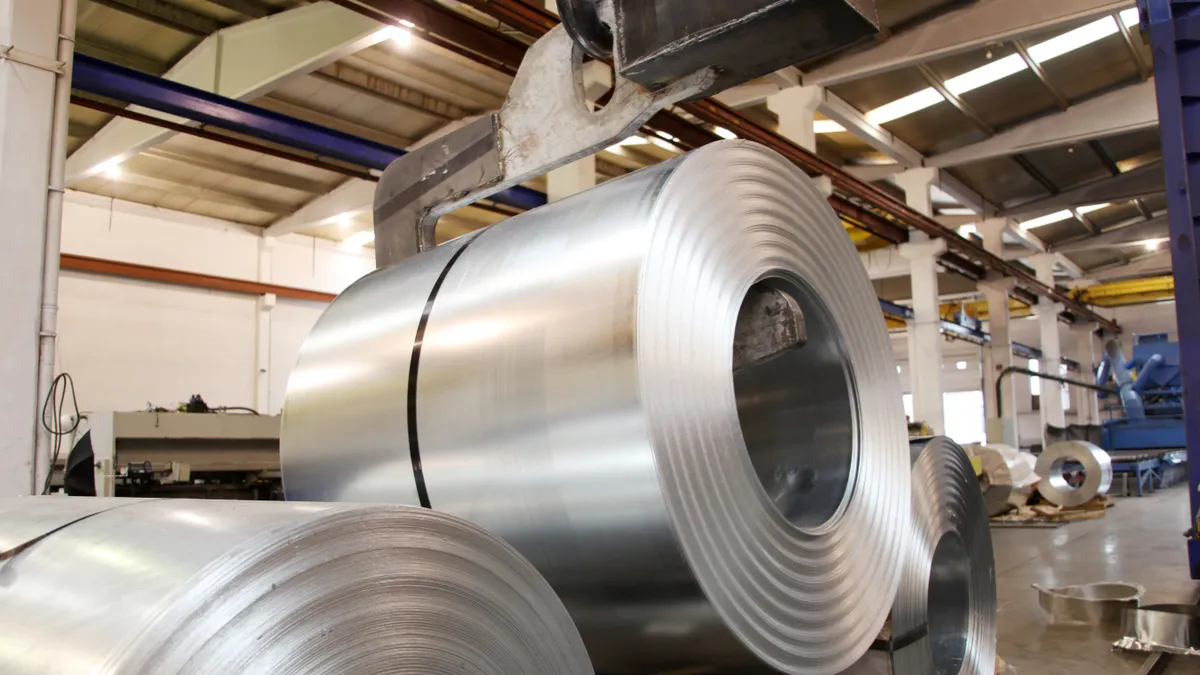
Amid last year’s changing tariffs situation, demand for aluminum in the U.S. and Canada still increased slightly in 2025, according to preliminary estimates reported by the Aluminum Association on Monday.
Shipments by domestic producers, and imports, increased 0.8% year over year to 26.65 billion pounds. Resilience in the second half of the year followed a 2% decline in the first half of 2025, AA reported.
Imports of aluminum and aluminum products into North America increased 9.1% in 2025, buoyed by flat-rolled products and unwrought aluminum, while exports of aluminum mill products declined 13.2%, AA reported.
Demand for aluminum extruded products fell 3.1% in 2025, while demand for foil, sheet and plate “experienced modest growth.” Additionally, aluminum scrap inventory increased 18.6%, which AA said was “driven by tariff policy that is incentivizing the use of scrap.”
While the Trump administration is pitching new tariff relief incentives for steel and aluminum manufacturers to produce in the U.S. for heavy-duty applications like cars and trucks, canmakers are still awaiting relief.
Last week, the U.S. Department of Commerce laid out a process through which Canada and Mexico’s steel and aluminum producers could have a lower Section 232 tariff if they made a binding commitment to build or expand production facilities in the U.S. — an opportunity that could reduce individual tariff levels from 50% to 25%.
The Aluminum Association said it was reviewing the proposal. “As written, the vast majority of U.S. aluminum facilities will not qualify for this benefit,” said Charles Johnson, president and CEO of the Aluminum Association, in an emailed statement. “Steel and aluminum tariff policy should not create incentives to produce or choose one material over the other.”
“America should make more aluminum and aluminum products — both primary and recycled — here at home. The U.S. industry is calling for strong trade enforcement targeting non-market economies; energy policy to grow primary aluminum production; harmonized tariffs and trade monitoring within North America; and common-sense efforts to recycle and keep more aluminum at home for U.S. manufacturers,” Johnson continued.
The Can Manufacturers Institute continues to advocate for tariff relief for primary aluminum and tinplate steel, President Scott Breen said in an emailed statement. “The result of these unavoidable tariffs is inflated costs for canned goods that threaten affordability. We should stimulate production of these materials in a way that puts America First across the U.S. metal can value chain.”
That situation intensifies the need to ensure that “foreign filled cans do not take further market share with the price advantage they are getting from the Section 232 tariffs not applying to them,” he said. This could be done in several ways, Breen noted, “including the Department of Commerce and the Office of the United States Trade Representative using its authority under Section (11) of the April 2 proclamation to add filled metal cans to the derivatives list,” he wrote.
Foreign filled cans were also a subject of CMI’s testimony earlier this month regarding USTR’s Section 301 tariff investigations.