Dive Brief:
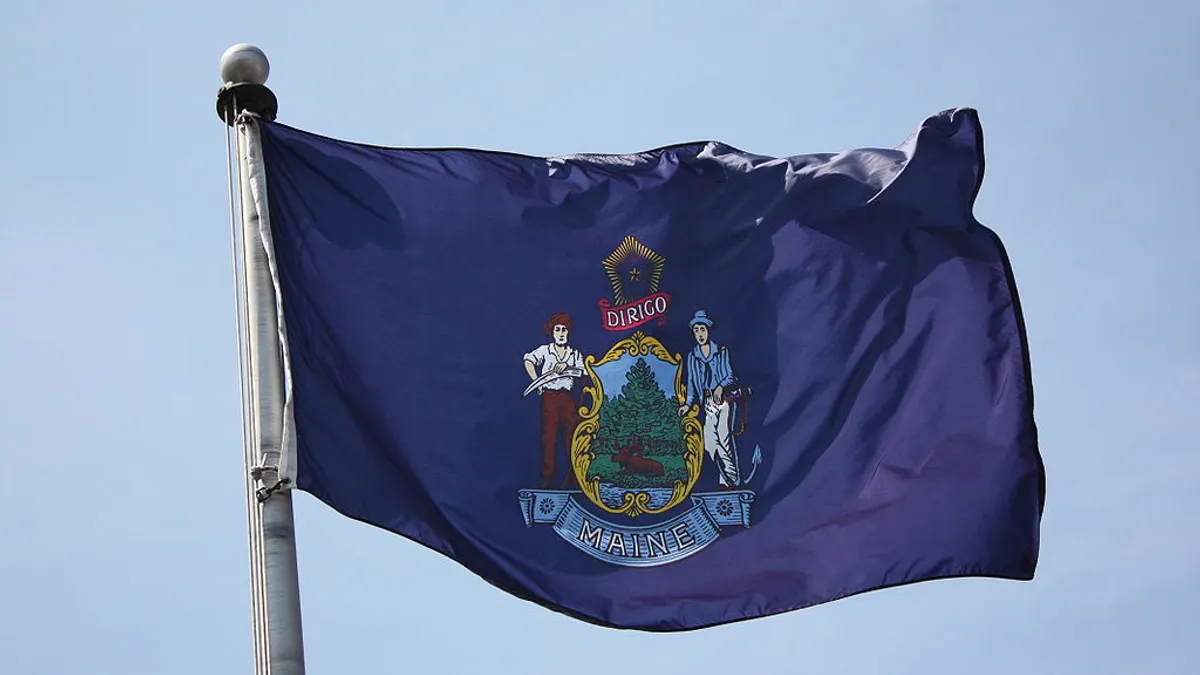
- The Maine Department of Environmental Protection received no electronic submissions to a request for proposals to manage its extended producer responsibility for packaging program by the Aug. 18 deadline. Communications Director David Madore said the agency is working to determine next steps.
- Circular Action Alliance, a CPG industry-founded producer responsibility organization selected to implement six out of the seven state-level EPR programs, declined to participate.
- The CAA previously said it would respond to the state’s RFP once available. The group opted out after deciding the scope of Maine’s RFP wasn’t aligned with its “operational practices, systems and data stewardship standards or the delivery of the consistent producer experience that is central to our strategic operating principles.”
Dive Insight:
In 2021, Maine became the first U.S. state to approve a packaging EPR law. But it’s since lagged others in getting a program off the ground and has seen delays in the implementation process.
Maine’s DEP released the RFP on June 15. It previously said the next step following a stewardship organization contract would be to establish a mechanism for producers to register. That initial registration will require producers to report on the estimated tonnage of packaging material produced during a specified timeframe. The agency also previously said it would provide further guidance to producers and municipalities this summer.
The department “intends to reassess the anticipated dates for producer start-up registration and invoicing,” Nadore said in an email.
The six other states with packaging EPR programs did not conduct the same type of RFP processes. Maine’s EPR law also differs structurally, due in part to a municipal reimbursement model. Many of the subsequent state laws have aligned more closely to a preferred model backed by CPG brand owners.
CAA said its decision to not engage was due to the design of the RFP, not a lack of interest in supporting Maine’s program.
Larine Urbina, CAA’s senior vice president of communications, said via email the group “didn’t have visibility into the full scope of requirements until the RFP was issued in June.” At that time it found the requirements differed too much from other states.
“The requirements would have required significant program-specific infrastructure and resources with limited opportunity to leverage the common systems, processes and governance approaches CAA has established.”
The nonprofit said it will reconsider if Maine “issues future RFPs with a scope more closely aligned with CAA’s operating model as a PRO.”
While other groups eyed the U.S. EPR market, no others have emerged as competitors to CAA for PRO contracts. Meanwhile, multiple groups have bid to become the PROs for other types of EPR programs such as textiles.
CAA operates as the PRO in California, Colorado, Maryland, Minnesota, Oregon and Washington. Programs in California, Colorado and Oregon are currently facing lawsuits that could affect the timing or scope of their rollouts.