After a judge in Oregon handed down a ruling in the nation’s first major packaging EPR lawsuit last week, attention turns to other cases that are in earlier stages, including in California and Colorado. The Oregon decision is poised to inform future arguments, outside attorneys say.
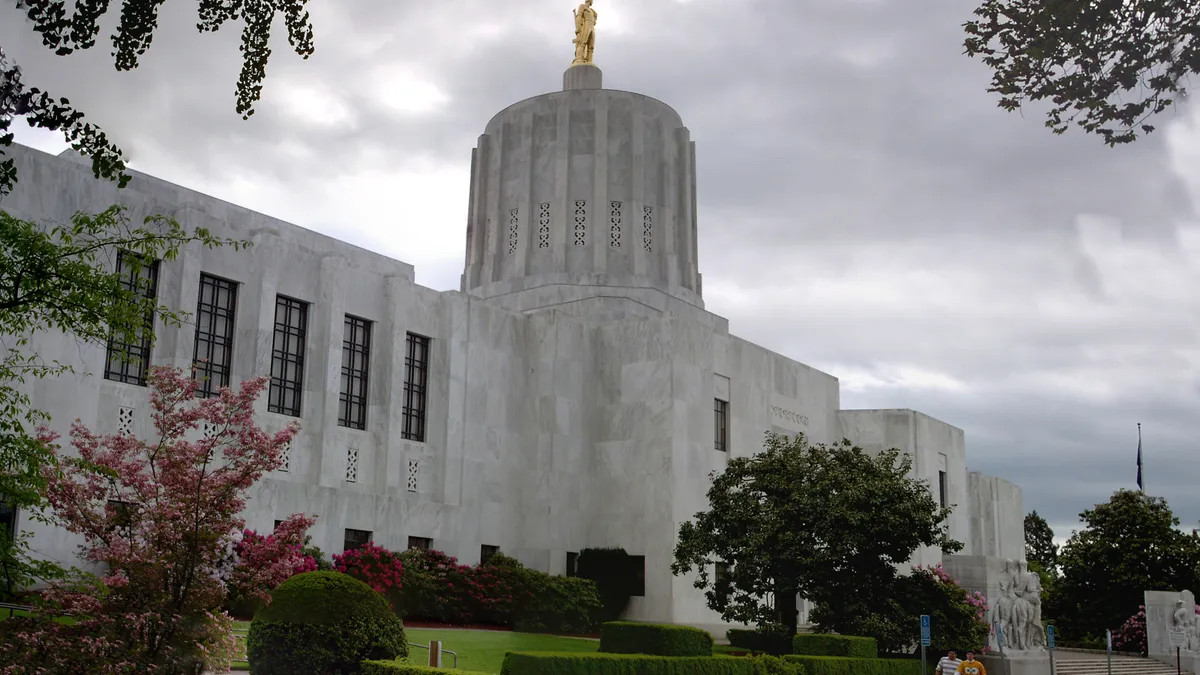
Judge Michael H. Simon did not find Oregon’s Recycling Modernization Act to be unconstitutional. The 2021 law, which established a packaging EPR program that launched in 2025, did not violate the Dormant Commerce Clause nor the Due Process Clause, he ruled.
After the ruling, the National Association of Wholesaler-Distributors, the plaintiff in the case, said it was “reviewing its options for next steps” but has not yet provided formal updates regarding the potential for an appeal or otherwise.
Simon’s wholesale rejection of the allegations was arguably surprising, given the preliminary injunction he granted NAW in February to block enforcement against members.
“I think the fact that they won the [Oregon] injunction so quickly — it gave a lot of faith that they were actually going to succeed in this challenge,” said Alison Torbitt, partner at law firm Nixon Peabody. That the judge came back “with kind of a blatant decision against them on every single claim is surprising,” she said. “Usually, you win a preliminary injunction like that, you have a hope — and then it did not go that way.”
Looking ahead, the Oregon opinion is likely to impact NAW’s arguments, Torbitt said: “They could go as far as amending the complaints, or it could just be influencing the way they move forward with the next motions.”
There are still multiple paths forward for plaintiffs seeking to challenge packaging EPR programs, noted law firm Beveridge & Diamond’s Justin Smith, of counsel.
One possibility is that an appeals court could rule differently. Another avenue is that Simon’s opinion leaves the door open for new evidence to be presented in future cases. While certain arguments in the Oregon case may have had merit, they lacked sufficient evidence, which “may well be because the Oregon program is still fairly early in its implementation,” Smith said. Additional evidence could lead to a follow-up in this case or a new case. “He left the door open for that kind of arrangement.”
Furthermore, despite some overlapping arguments in the various packaging EPR lawsuits filed to date, other state laws have differences from Oregon’s, which could lead to different oucomes. For example, California’s law adds “scrutiny on recycling that occurs out of state, which could be analyzed differently under the Dormant Commerce Clause,” Smith said.
This is a novel arena for legal challenges, and Simon’s opinion “will absolutely get careful attention from other district court judges who are facing these issues,” Smith said.
Upcoming actions
Another challenge to Oregon’s EPR law that’s still ongoing is a class action lawsuit brought by Karat Packaging subsidiary Lollicup USA.
It came after Simon was unwilling to add more parties to NAW’s lawsuit, Smith said. It’s possible that the class action could be a vehicle for parties to “exploit some of the areas that Judge Simon left open for further factual development,” Smith noted generally.
Parties in the class action case have until Sept. 10 to file a joint status report. Torbitt expects plaintiffs will look back at the original complaint and consider amending it based on “which different arguments still hold water” after Simon’s decision in the related NAW case, Torbitt said. Separately, a post-ruling analysis from lawyers at Holland & Knight suggested the class action “may be dismissed in light of this decision.”
There are also upcoming deadlines in NAW’s California case. NAW was the sole business party in the lawsuit brought by Nebraska Attorney General Mike Hilgers and more than a dozen other Republican AGs. Plaintiffs recently motioned for a preliminary injunction in that case. A hearing is slated for January, Torbitt noted.
SB 54 backer and California state Sen. Ben Allen claimed last week’s Oregon decision as a positive sign for California.
“This decision re-affirms the states’ authority to tackle rising costs of plastic pollution through smart, commonsense laws that hold producers accountable,” he said in a statement. “This decision reinforces that extended producer responsibility laws are both legally sound and essential to building a more sustainable, affordable future.”
Likewise, in Colorado, both NAW and the Independent Lubricant Manufacturers Association filed for preliminary injunctions in their respective cases in August.
Pending packaging EPR lawsuits
Editor’s note: This story has been updated to clarify a quote from Smith.