
The United States is preparing to levy new tariffs on 14 trading partners due to alleged structural excess manufacturing capacity and production, according to a press release from U.S. Trade Representative Jamieson Greer on Wednesday.
The release did not provide a planned implementation date for the proposed tariffs — which would cover imports from China, the European Union, Japan and more — but they wouldn't arrive until next year at the earliest. Comments on the duties can be submitted by the public by Jan. 5, 2027, and the USTR will hold hearings on the proposals on Jan. 25 that will continue "as appropriate," per the release.
The proposed tariffs, which include exemptions for certain goods, vary by trading partner. For example, imports from China would face a tariff of up to 20%, while goods from the European Union are slated for a 15% duty.
US eyes new tariffs on 14 trading partners
For imports from Vietnam and India, which are slated for the highest rates, as well as Singapore, the proposed tariffs could be lowered to 20%, 17% and 10%, respectively, if reciprocal trade deals are reached that are “responsive to the determinations in this investigation,” according to the release.
The proposed levies are net of Most-Favored Nation rates for certain partners like the European Union and existing Section 301 duties, impacting the amount importers will end up paying for tariffs.
"Take a company that imports $1 million in Chinese goods already subject to July’s 12.5% Section 301 forced-labor tariff," Pete Mento, director of global trade advisory services at Baker Tilly, said in a LinkedIn post. "If those goods also fall under the proposed 20% excess-capacity tariff, the higher of the two rates would apply. The company would go from paying $125,000 under the forced-labor measure to $200,000 under the excess-capacity measure."
The latest tariffs resulted from one of two Section 301 investigations the Trump administration initiated in March focused on manufacturing production and capacity. Wednesday's proposal covers 14 of the 16 economies originally investigated, with no new duties proposed for Mexico or Norway at this time.
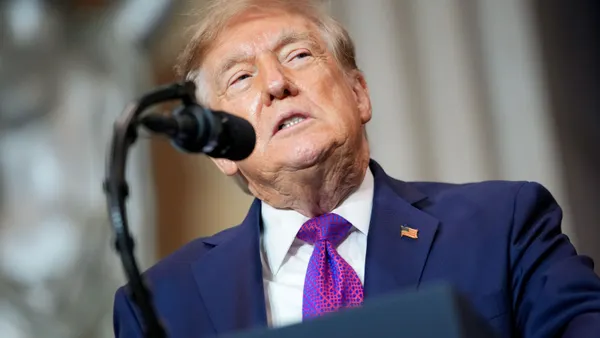
“For decades, many of our trading partners have adopted industrial strategies built on targeting manufacturing, wage and labor suppression, financial and other support, non-market economy inputs, and other market distorting practices that tilt the trade balance in their favor while eroding America’s manufacturing base,” Greer said in the release, adding that the announced actions aim to eliminate "these unfair acts, policies, and practices."
The other Section 301 investigation focused on forced labor prevention efforts by trading partners such as Canada, China, the European Union and Mexico. The probe resulted in levies of either 10% and 12.5% on imports from 60 trading partners. Those tariffs went into effect in July.
The Trump administration has used the Section 301 lever to implement additional tariffs on goods from Brazil and Nicaragua as well as China-linked ship-to-shore cranes. The administration is also conducting several other Section 301 probes, including reviews of Germany's pharmaceutical pricing, Vietnam’s intellectual property policies, and China’s adherence to a trade pact struck during Trump’s first term.