Recovered fiber grades, they are a-changin', according to speakers during two sessions at the Paper and Plastics Recycling Conference on Oct. 28 and 29. Speakers offered perspectives on demand dynamics and grade substitutions as cost and quality concerns surface.
When it comes to recovered fiber grades, "It's all about OCC," said Bill Moore, president of Moore & Associates, pointing out a consistent increase in demand for old corrugated containers for the last 25 years. The other categories are "pretty small in comparison and not really going anywhere," he said, referencing overall flat demand for mixed paper and steady declines for newsprint.
United States recovered paper volumes totaled nearly 45,000 tons in 2025, according to Moore’s data. OCC substantially led all other grades, coming in at 33,000 tons, followed by mixed paper at 5,500 tons and deinked high grades at 3,400 tons.
In 2008, the top 10 recycled fiber grades in North America were "still balanced between communication papers [and] packaging," said Trip Jobe, vice president of sales for forest value chain at ResourceWise Consulting. "Now, as we move forward and look at where we stand today, you see a big shift." In particular, recycled fluting grew 7% and testliner grew 6% during that time, while standard newsprint dropped out of the top 10 altogether.
Multiple speakers pointed to the steady decline in North American volumes for sorted office paper during the last decade.
"Mixed paper and office waste — or any deinked grade, for that matter — are two of the ever-most changing, evolving grades that we see," said Ceri Krening, director of recovered paper at market intelligence and price index firm TTOBMA.
The COVID-19 pandemic accelerated the SOP volumes decline because employees' attendance in offices dropped sharply. A slight uptick in SOP occurred in 2023 when more workers returned to offices, but that was a blip, and the current trend is for declining volumes, said Jason Myre, major account manager in commodity sales at WM. "We're never going to see it go away completely, but it's going to be declining as we go forward," he said.
Similarly, "in mixed paper, in general, we're seeing lower volumes," said Patrick McDonald, senior manager of procurement and sales at Sonoco. "MRFs are using smarter sorting techniques with advanced opticals, pulling more of the brown out."
Quality control for recovered fiber
As more MRFs add advanced technologies, "small brown that was traditionally going as mixed paper is now being ejected into the OCC stream," said Jeff Snyder, CEO at recycler The Wilmington Group. "The entire stream that's coming into a material recovery facility, about 35% of it is corrugated today. That's a big number compared to 10 years ago when it was 18-20%.”
The shifts in recovery and demand are also prompting changes in quality for various grades. Mixed paper quality can be a mixed bag, according to several speakers. But in general, mixed paper quality is improving because of MRF advancements, according to WM’s Myre.
"Mixed paper is still the result of everything else that was not taken out of the stream," he explained. "We're much better at capturing the cardboard, the plastics and all the other materials that we see go through the MRFs instead of letting them go into the mixed paper."
China implementing its National Sword policy eight years ago also has resulted in higher quality, speakers said. And some of the quality question comes down to customer specifications and the need for the long fibers generally found in brown grades versus short fibers. “But there's still a lot of long fiber in the mixed paper,” said Snyder.
The quality improvements aren't necessarily occurring with high grades, though.
"We're also seeing the [SOP] quality decline as more and more recycled paper is coming back," said Stacey Turner, general manager of paper recovery at Sustana. "With the decline in available good quality SOP material for us to use as part of our recycled content, we're always looking for the next thing. ... New materials are being introduced, whether pre- or postconsumer.”
Fiber grade substitution
Fiber choice also comes down to price. Mills often substitute grades when the commodities they’re using increase in price, as seen with higher OCC prices throughout 2026.
“For October, I think we've got a $60 delta between OCC and mixed paper, which is which is higher than it usually is,” said Sonoco’s McDonald. “We've seen some mills transition more toward mixed paper consumption as they change their recipes again, just because of the monthly pricing.”
Recycled fiber utilization in containerboard has been steadily moving up over time, Moore said, increasing from 48% in 2008 to 56% last year. The content is what contributes to OCC being a significant export grade for the U.S.
“The world loves our OCC because even though our recycled fiber content is still going up, we still have almost more virgin fibers than most regions of the world," Moore said. It’s widely recognized that recycled fiber degrades with each cycle, and virgin is injected to ensure material integrity. But now more OCC "is staying home because we built all this recycled containerboard capacity,” Moore said.
Approximately 252 million tons worth of fiber lines have been added globally since 1990, nearly all of which is recycled capacity — virgin represents less than 5%, ResourceWise’s Jobe said. In North America, a lot of recycled containerboard capacity was built between 2018 and 2023, Moore noted. While 2025 alone brought a 10% containerboard production capacity reduction, most of that was for virgin.
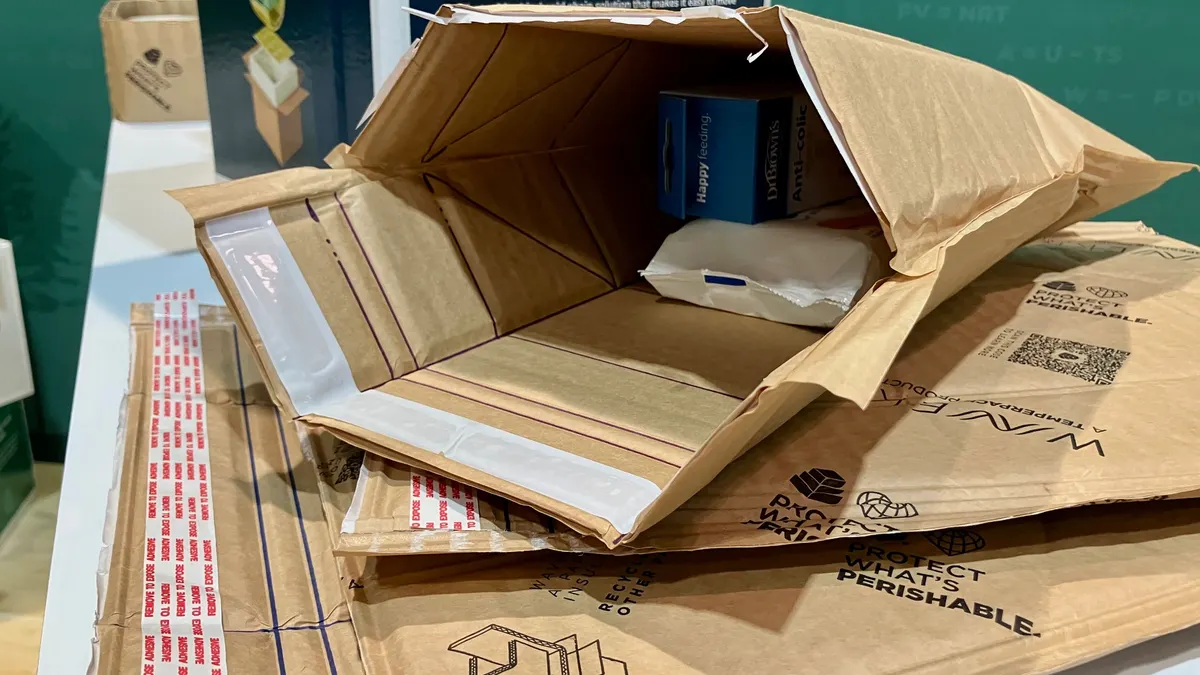
Containerboard demand has increased for decades, but growth has slowed, speakers said. Factors including lightweighting, rightsizing and e-commerce giants shifting from corrugated boxes to mailers are affecting containerboard demand and OCC generation.
“That’s not going to stop,” Moore said.