Flexible packaging specialist ePac is having what many would consider a milestone year.
In January, it was acquired by private equity firm Butterfly Equity, marking the latter’s first packaging investment. In February, the company announced a $50 million, three-year agreement with HP to install more than 10 digital printing presses. San Diego-based ePac has nearly two dozen locations and announced footprint expansions across North America this year: It’s scaling operations in Atlanta, Philadelphia and Vancouver while preparing to open a new facility in Phoenix.
EPac serves CPG customers, appealing to smaller and medium-sized brands that demand faster and more nimble packaging suppliers. The company strives to provide customers with quick turns of 15 days or less. Digital printing enables that speed and is a pillar of the company’s business strategy.
Virag Patel co-founded the company in Wisconsin in 2016 and became CEO in 2023.
“The industry still sometimes operates within a resource-heavy pool. I think we chose the path of balancing really good resources with a lot more technology and workflow,” Patel said. “We have immense amounts of data when it comes to trends and what customers are asking for. We continue to reprioritize our product development and innovation pipelines based on that feedback.”
Patel spoke with Packaging Dive about how ePac is finding success by adapting to changes with technology, policy, customers and within its own business.
This interview has been edited for clarity and length.
PACKAGING DIVE: EPac has had a lot of action so far this year. Is the timing of all of these elements coincidental or part of a larger plan for growth in 2026?
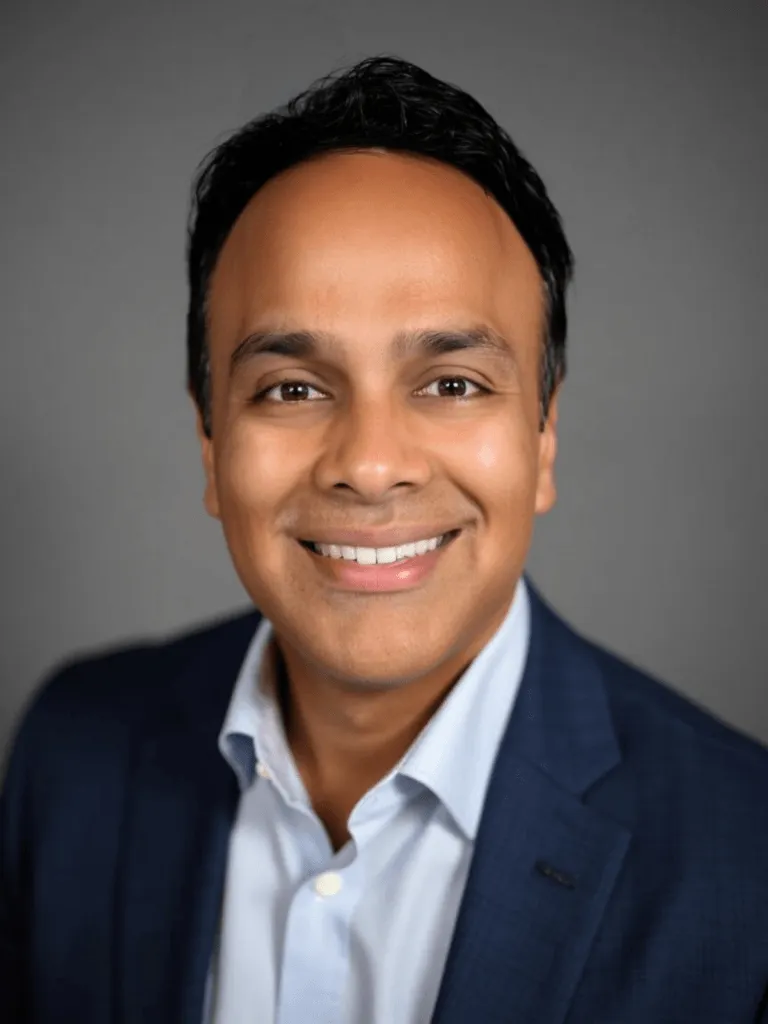
VIRAG PATEL: Maybe I can start with the Butterfly acquisition. It was certainly something that our previous board, and myself included as an owner, supported.
We got to a place where the company grew really well and rapidly, and then to take that next step we thought finding a really strong strategic partner made a lot of sense. We spent the better part of a year walking through a process to find the right fit for us, and Butterfly checked off all the boxes.
They’ve got a really great operating team. It's a nice-sized private equity firm. You get a lot of touch points within the company. But the bigger draw, besides the experience of the team, has been the portfolio itself. They like our customers. They like the space that we play in. They fuel smaller and mid-sized consumer goods companies to become bigger, and I think they've also recognized that packaging needs to be part of that portfolio.
Growth has always been part of our strategy. We've been on a pretty big growth trajectory since we started the company, and we wanted to ensure that the next partner would keep that momentum up — and then add additional value to our growth strategy.
If we’re not growing double digits every year, then we’re not happy. Digital is growing at such a rapid pace. The goal is always to at least keep up with the whole industry’s growth, if not continue to exceed it.
Digital printing and decentralized production are two aspects of ePac's business model that you often highlight. Why are those important?
We always wanted to eliminate long lead times and plate fees and high minimum-order quantities. Digital obviously checks off all those boxes. And I think it's even more relevant today with a lot of the supply chain shifts and things like that, where people don't want to carry a bunch of inventory. They want to buy what they need when they need it.
When you couple that with our strategy to build out a network of these facilities across the globe, it allows us to take the next step as businesses grow. And when they do grow, the complexity of their supply chain changes.
Digital and the network itself allows us to scale. You have to have both in order to make this work at a certain size of customer. We want to help those brands grow, and we want to be part of that journey as they do.
You’ve previously touched on how ePac’s localized operations and distribution means tariffs are a tailwind. What are your thoughts on tariffs now as the U.S. and Canada escalate their trade war?
It's still early, but I think the good news is we’re pretty well situated. We've got operations in Canada and we've got operations here. I think what you're seeing is there are a lot of brands on both sides of the border, and we're selling into both markets.
We’re looking at customers’ supply chains. If they were buying packaging from Canada and co-packing in Canada and selling to those customers here, they're going to have to shift that model. EPack is situated well to take advantage of that.
I think as customers start becoming weary of that whole disruption on supply chains, the easy answer is nearshoring. We can nearshore here. We can nearshore in Canada. So we continue to be pretty bullish that our model will work well.
What other elements do you think set apart ePac from other flexible packaging suppliers?
The scalability in digital is unique. We have the largest digital fleet in the in the world, I think. And we're really, really strong on pouching.
Every plant's got multiple pouch lines. You multiply that by multiple plants, and we can help a business who is scaling. They don’t have to go anywhere else.
You're not dealing with big CPG companies that have got tons of packaging engineers and are smart about technology and material sciences and things like that. The entrepreneurs we work with have a business, and their core is making their products. Packaging is sort of a secondary thought process. We bring a lot of the expertise in demystifying packaging and plastics to allow them a simple way to understand things.
They can bring in 5,000 customers today and 20,000 customers tomorrow. Our system is built for scaling that without adding incremental resources every time. I think that's unique.
What is the top challenge that ePac faces right now?
It’s never enough. We created this market to allow small brands, mid-sized brands to interact in a custom packaging world. And when you do that, the expectations start becoming more and more. They want more. They need more. They deserve more. Delivering more on the experience needs to continue to be the biggest thing we do.
Artwork is a great example. There's only so much automation you can create in that without having personal interface with a customer on design, colors and things like that. That's an industrywide problem. How do you make that process better?
Some of that's technology: There’s a lot of good things coming out on the prepress side and design side. But some of this is just how you manage that interface with the customer and set expectations. So we're spending a huge amount of our time and our resources really simplifying that customer experience, making it better.
Last month marked ePac's 10th anniversary. What has changed the most since you co-founded the company?
The adoption of digital. The fact that smaller entrepreneurs are building digital houses and getting into the game has allowed the strategy to really expand beyond where I thought it was going to go in this short of a period of time.
Our industry is 35, 40 years old. It doesn't move as fast. When you are such an established industry, things take time. Change is not easy when you're a $50 billion market. There are a lot of players in it, a lot of complexity.
What surprises me is how well digital has started to entrench itself in the mainstream conversations, which is really great. It's great for customers. It's great for sustainability.
I think the biggest thing that's changed is the experience that customers are expecting. Ten years ago, most of these small brands had to buy stuff from overseas in a stock bag with a label on it. That expectation is very different than them spending a lot of money on buying a fully printed package that's going to sit on the shelf at a national retailer. I think that pressure for the brand itself is also creating a lot of additional opportunities for us to improve our business.
I’m amazed at how adaptive both the consumer and our customer is. Whether it’s EPR or ingredient changes, our customers are really advancing rapidly in adapting to that change. I've never seen it at this pace before.
I'll use PFAS as an example. We changed all of our supply bases when that started becoming a big issue. And within six months, all of our major vendors changed. Our inks, our whole supply chain.
I think another part is people want to come into the industry. A lot of people coming straight out of high school or college or technical schools are deciding to make packaging their career. I've never seen it as mainstream as this before. That is a pleasant surprise.
You mentioned extended producer responsibility. What are your thoughts on where that — and sustainability, generally — is going for packaging?
I am seeing a lot more uptick in sustainability again, which is really encouraging. This is coming from our customers. They're demanding lighter substrates. Some of this is cost-driven, some of this is sustainability. Different alternatives like paper are continuing to make a bigger inroad.
Sustainability is still top of mind for us. And I think with the EPR laws coming in place, the network we built out is really well situated to ensure that we're near enough to manufacturing as possible to eliminate a lot of the freight.
What can we expect to see from ePac going forward?
Phoenix is our new flagship facility. It's going to be our largest plant that we've ever built. We’re super excited about the market, the community there. The blueprint of that facility helps us understand how we want to look at future growth and new sites as technology advances.
I always like to use the flat-bottom analogy. We've got flat-bottom equipment in our plants, and we're seeing a heavy amount of growth in flat-bottom need. Those assets are three times the size of a standard pouch machine. When you built out plants 10 years ago, the footprint of that facility needed to house standard pouch lines. But printing technology is advancing, so the facility itself has to start to look different.
The machines are going to get faster, better, higher quality. That's going to change the size of the of the facilities as well. We're adding some really cool technology like spot embellishments. That's more suited for digital. That's coming out soon.
Digital is evolving every two, three years. You're seeing big leaps. I don't think that's going to stop. So we have to continue to be adaptive to that change. And we are. We embrace change.