Graphic Packaging International executives described during Tuesday’s second-quarter earnings call the momentum for removing costs amid persistent input cost inflation and other economic challenges. Inflation now is expected to add at least $150 million in costs for the year instead of the previously predicted $60 million to $65 million. Despite a consumer environment that “remains challenged and uneven, we delivered results that were in line to modestly above expectations,” said CEO Robbert Rietbroek.
Volumes were steady year over year, he said; strength in the food and health and beauty segments was offset by declines in household and foodservice. GPI reduced net debt by $100 million in Q2, ending with $5.5 billion of net debt and a net leverage of 4.7 times, said interim CFO Chuck Lischer.
GPI is conducting a market study to determine which product segments offer the most sustained opportunities for growth. Executives intend to share more information related to these strategic plans later this year.
“We are confident it will improve our alignment between strategy, investments and market opportunity. These important insights will help guide our long-term growth priorities,” Rietbroek said.
Inventory reduction
GPI is experiencing headwinds related to its 2026 inventory reduction goals. During the first half of the year, the company reduced inventory by approximately $75 million. But some of the optimization intended for this year will now be pushed into 2027, and 2026 will end with relatively higher inventory. Inventory is expected to be 18% to 19% of sales, Lischer said.
The change is driven in a large part by issues with unbleached paperboard, where a maintenance cycle put in place last year — combined with other production issues — “resulted in inefficiencies, higher operating costs and challenges with board supply during the 2026 beverage season,” he said.
Further footprint shrinking
Inflation across inputs has prompted GPI to take additional cost-reduction measures, according to executives, including further shrinking its footprint. That’s on top of already reducing the workforce this year by nearly 3%, approximately 500 roles, as part of a restructuring.
The company plans to close a facility in Lebanon, Tennessee, and consolidate volumes across facilities. GPI also notified employees that it potentially would close a site in Winsford, United Kingdom. And in Q2, the company finalized the divestiture of its Croatian subsidiary, Istra. Proceeds from divestitures will be used to reduce debt, executives said.
URB market re-entry
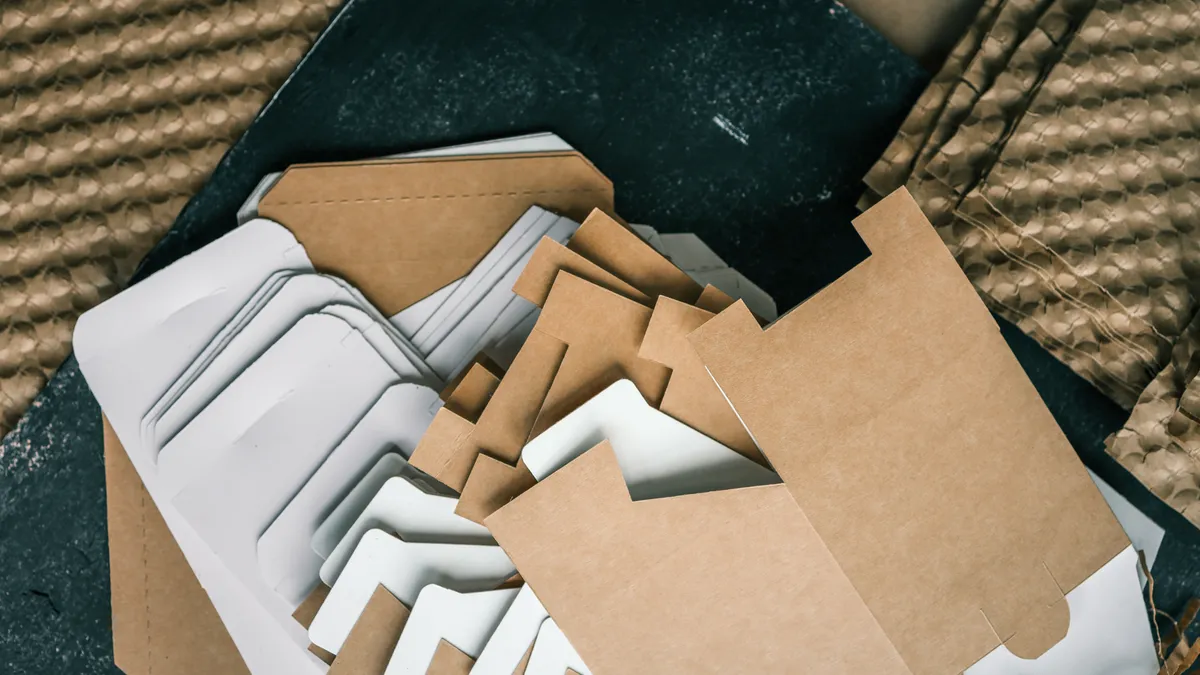
Executives gave more information about last month’s announcement that GPI is entering the uncoated recycled paperboard with the introduction of its PaceSetter Ridgeline product. This action will take advantage of the current tightness in the URB market, Rietbroek said. He clarified that this is technically a re-entry into the URB market, because GPI used to produce that grade at its plant in Middletown, Ohio, before closing the site last year.
The company believes there is at least 100,000 tons worth of growth potential, supported by both internal and external demand. Already, GPI has received its first orders for PaceSetter Ridgeline amounting to “a couple-thousand tons,” Rietbroek said.
It will be produced at the newly opened mill in Waco, Texas, originally heralded as a CRB plant. That mill already has the ability to produce both grades, so the market re-entry is being done without major capital investments, according to Rietbroek. He said GPI is creating value in this space through its flexibility, which will result in higher earnings.
Raising prices
GPI recently announced various price increases intended to offset input cost inflation for the remainder of 2026 and into 2027. On Monday, the company announced another hike for recycled paperboard. Based on the likely timing of price recognition, the new increases are not expected to have a significant impact on 2026, Lischer said.
In July, Fastmarkets RISI recognized GPI’s $60 per ton increase for bleached cupstock and $40 per ton for bleached folding carton. The company expects the pricing actions previously announced this year to have a $60 million favorable effect in 2026, and about $85 million in 2027. If the newly announced increases are fully recognized, that would bring an additional $200 million on an annualized basis.
GPI has about $1 billion worth of business in which pricing is not determined by a contract, Lischer explained.
Resetting guidance
GPI lowered its guidance for the year, in large part due to expectations for inflation to remain higher for the rest of 2026 instead of moderating.
While the company previously anticipated full-year net sales of $8.4 billion to $8.6 billion, that’s now the high-end range. Full-year adjusted earnings before interest, taxes, depreciation and amortization is expected to be at the low end of the guidance range of $1.05 billion to $1.25 billion. Free cash flow expectations are now $600 million to $700 million, down from $700 million to $800 million. The company expects full-year volumes to be within a range of down 1% to up 1% year over year.
Despite the overall lower guidance, executives noted that GPI did better than anticipated on cost reduction and efficiency in Q2. Executives now expect to deliver approximately $85 million in 2026 cost savings compared with the previous expectation of $60 million.
“2026 is an important year in our journey as we strengthen the business and position Graphic Packaging for sustainable growth and margin improvement,” Lischer said.