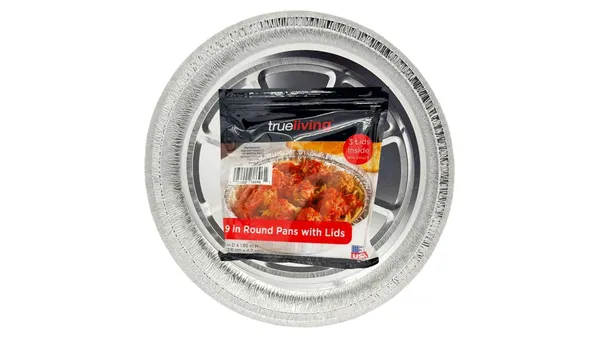
Sometimes small product design changes can make a big difference for manufacturing efficiency and customer experience. That’s the idea behind Wyda Packaging USA’s introduction of a plastic pouch to hold and protect the lids for its private-label aluminum food containers.
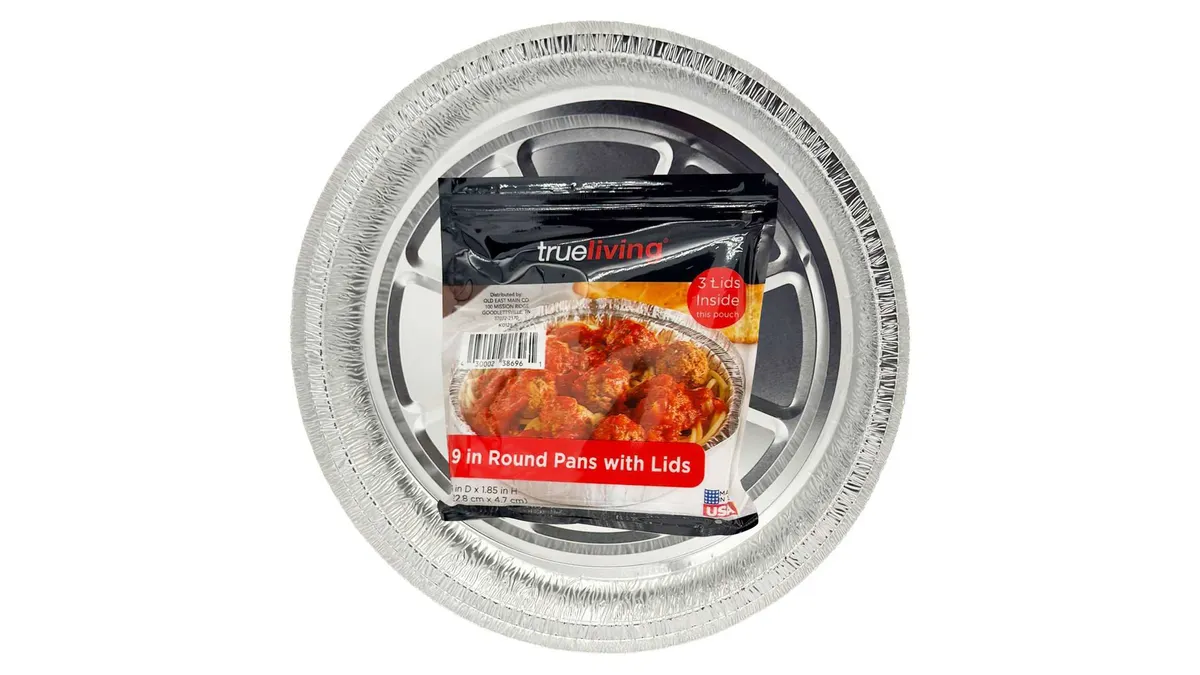
Previously, the folded lids were inserted between the stacked pans and a label was affixed to the top pan in the bundle. Now, the lids are housed in a polyethylene pouch, which is affixed to the top pan in lieu of the label.
In a time when many companies are lightweighting their packaging and removing plastic, Wyda describes the change as a one-to-one component swap.
“The component count still is the same, but it's a different material and a different application,” said Celeste Costa, head of sales and marketing at Wyda Packaging USA, during an Oct. 19 interview at Pack Expo.
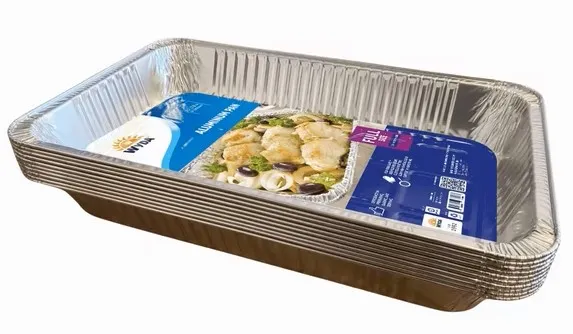
Wyda, an aluminum trays specialist founded in Brazil, supplies metal containers for food service customers. Its private-label products are sold at grocery stores, convenience stores dollar stores and club stores, including at Walmart and Sam’s Club.
The team noticed that the previous private-label product iteration “wasn't set up in a way that the lids were protected from contamination, and the final presentation of the product wasn't very nice,” Costa said. So she and other Wyda employees developed a new design, taking inspiration from packs of baseball cards to create a similar pouch.
Besides a better customer experience, the company found that the design change improved its operations. The previous model “to insert the lids betweeen trays is a process that reduced the efficiency,” said Daniel Mendes, country manager at Wyda Packaging USA. The efficiency gains offset the small cost increase to add the pouch, so the overall product price remained the same for customers.
Wyda developed this pouch specifically for the U.S. market and released it this spring. The family-owned company is still based in Brazil and has only had a presence in the U.S. since 2024 when it established its regional headquarters in Charlotte, North Carolina.
In the past, these types of aluminum trays largely were imported to the U.S. from China and Southeast Asian countries, Costa said. Wyda had wanted to establish operations in the U.S. for years, and the prospect became more attractive during the first Trump administration due to various tariffs that affected imports of these metal containers.
The tariff impact has only increased since then. For instance, last year the United States International Trade Commission determined there is harm to U.S. industry from imports of disposable aluminum containers, pans, trays and lids from China that are sold at less than fair value, thus warranting antidumping and countervailing duties.
“The supply chain is moving to this direction to supply and manufacture domestically this kind of product,” said Mendes said.
Metal tray products are heavily consumed in the U.S., and Wyda doesn't anticipate demand slowing down anytime soon, Costa said. That’s driving the company’s expansion aspirations in North America.
Wyda recently disclosed it intends to double production capacity in Charlotte over the next two years. It’s also considering expansion potential in the U.S., with Texas and the West Coast looking particularly attractive, along with other North American countries, according to Costa.
In addition to scoping areas that have a compatible labor pool and knowledge base for its operations, Wyda is considering regional product demand and logistics. The latter is important both due to the products’ light weight and the skyrocketing cost of diesel and freight.