As of this week, manufacturers producing and printing any new packaging that will be sold in California are expected to do so in alignment with long-anticipated “truth in labeling” law SB 343.
Labeling restrictions established by SB 343 apply to products and packaging manufactured after Oct. 4, 2026, per CalRecycle. But the situation is muddied by an ongoing court case that currently largely blocks enforcement actions via a July preliminary injunction, and there could still be risk for private litigation for businesses that don’t comply.
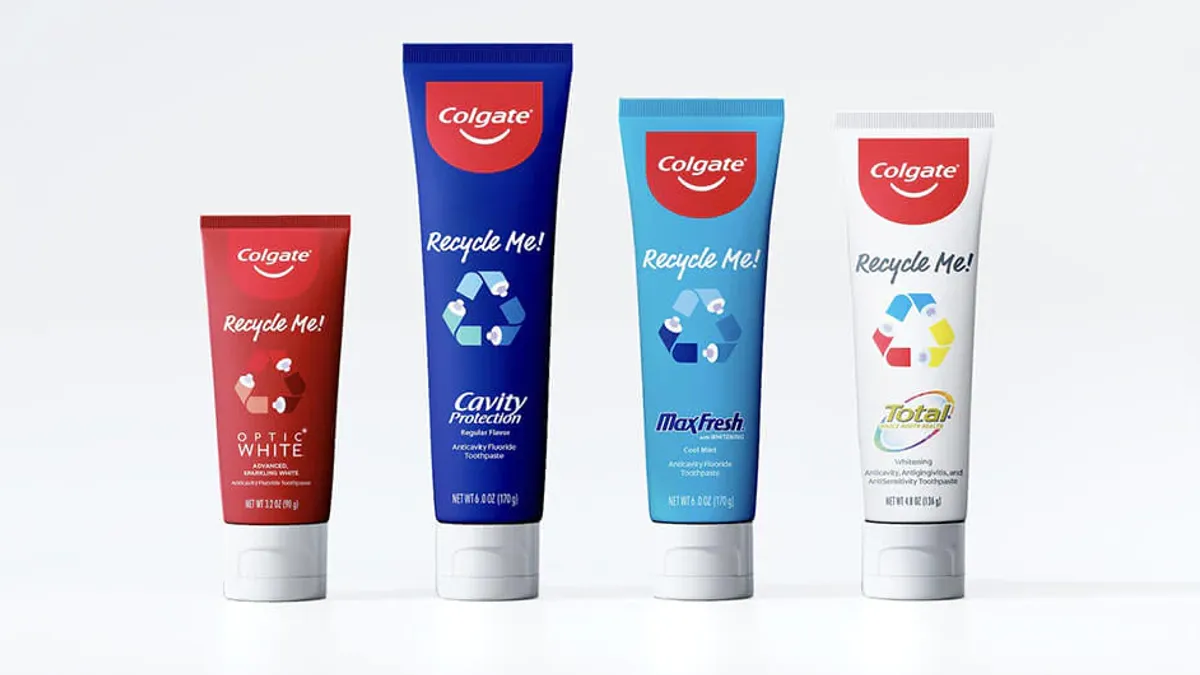
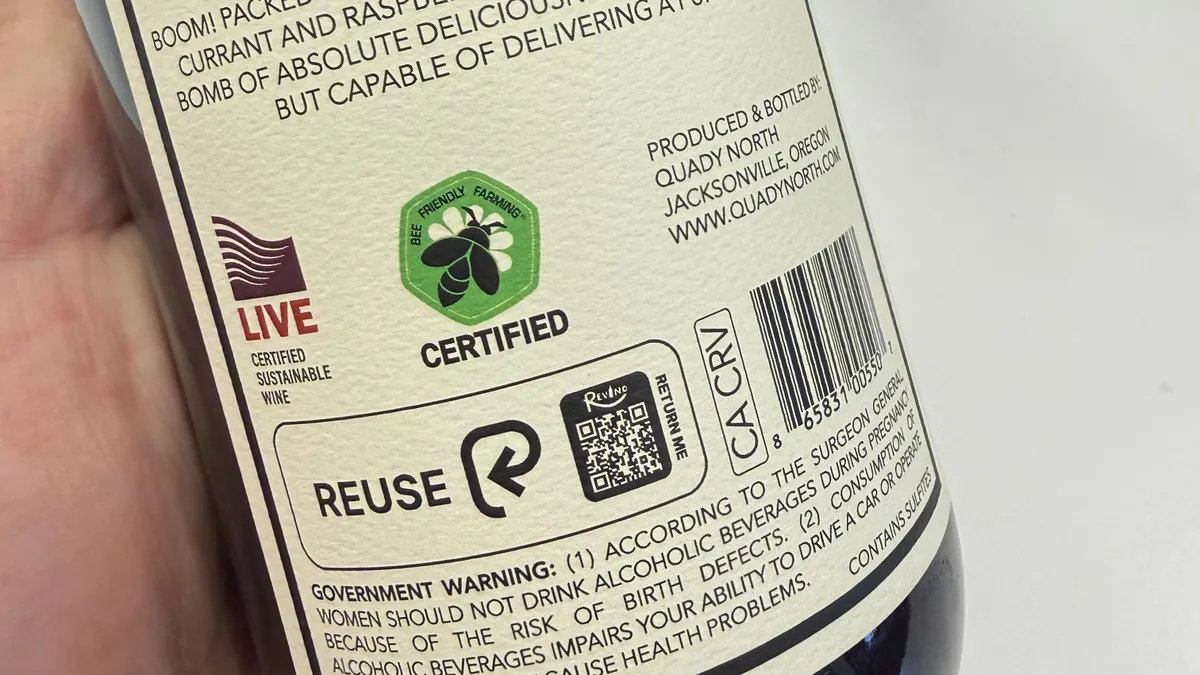
The law, adopted in 2021, sought to crack down on widespread use of recyclability symbols, particularly the chasing arrows. It aims to ensure that any material called recyclable is actually collected in programs serving 60% of California’s population and sorted by facilities serving at least 60% of statewide recycling programs, among other parameters. Material-specific recyclability determinations also have implications in the extended producer responsibility program established by 2022’s SB 54.
SB 343 introduced “a whole new level of burden of proof” for recyclability, said Sarah Paleg, director of sustainability in Amcor’s flexibles business, during an SB 343 panel focused on paper packaging recyclability at SPC Advance in California last week.
Paleg believes the policy is “paralyzing change” to certain formats like flexible paper. Some prospective clients might be interested in exploring such a change for sustainability benefits, she said, but get discouraged by confusion around how such packaging is classified in California and whether it can be signaled as recyclable to consumers.
Businesses navigate labels strategy, packaging choices
Groups have been preparing to help businesses comply with the law. The Association of Plastic Recyclers created the APR Design Assessment Tool to evaluate the recyclability of entire plastic packages and determine compliance with SB 343 criteria. Likewise, How2Recycle rolled out How2Recycle Pro labels, which were intentionally designed in compliance with SB 343.
At the time of the preliminary injunction, How2Recycle told its members that the court’s action did not shift the organization’s plans. That hasn’t changed, How2Recycle Director Emily Williams told Packaging Dive last week, despite members’ significant confusion and different interpretations as to what the injunction means and the timeline for next steps.
“Until there’s additional clarity on the path for that law through that suit that's ongoing, then our position right now is continue to plan to be compliant,” said Williams.
Williams suggested SB 343’s shadow is impacting adoption of How2Recycle labels in different ways.
On the one hand, How2Recycle’s in-bound label requests are up 29% year over year. “I think there’s some comfort in safety in numbers of everyone utilizing the same labeling system that has a known methodology,” Williams said.
This year, How2Recycle has processed some 35,000 requests as users transition to the How2Recycle Pro label, Williams said. In light of SB 343, some users’ product packaging is now designated as “check locally” rather than “widely recyclable.”
Additionally, a How2Recycle member company could decide to print the How2Recycle label on some products’ packaging and not others. While How2Recycle would encourage use of its labels on all products to aid consumers, “that’s how their organization has decided to manage their risk, and that is their choice,” Williams said.
Simultaneously, some companies are holding off on new labeling decisions until they get clarity in California, she said.
The Sustainable Packaging Coalition, which like How2Recycle is housed under nonprofit GreenBlue, shared new consumer research last week emphasizing the role of on-pack guidance in recycling decisions. In a 1,000-person survey, 53% of the U.S. residents surveyed indicated they rely on their ingrained habits to decide how to dispose of packaging. At the same time, 54% said clearer, more visible instructions would grab their attention more.
Legal challenge, federal alternative efforts continue
The Flexible Packaging Association, the American Forest & Paper Association and numerous other business groups are plaintiffs in the federal lawsuit first filed in March that argues SB 343 restricts free speech.
Following the judge granting a preliminary injunction in July, environmental advocacy nonprofits Californians Against Waste and the Earth Island Institute had sought to intervene in the case, but the court denied that last week. A case management conference and early neutral evaluation are scheduled for Nov. 4.
Meanwhile, packaging industry groups continue to seek an alternative to California’s truth in labeling law.
Ameripen has championed a bill in Congress known as the Pack Act that would preempt state laws such as SB 343. The bill seeks to amend the Federal Trade Commission Act to include certain requirements for recyclable, compostable and reusable claims for consumer product packaging, including that they make qualifying claims and are backed by third-party certifications if they feature a chasing arrows symbol.
On Sept. 16, the Committee on Energy and Commerce voted to advance the bill to the full House.